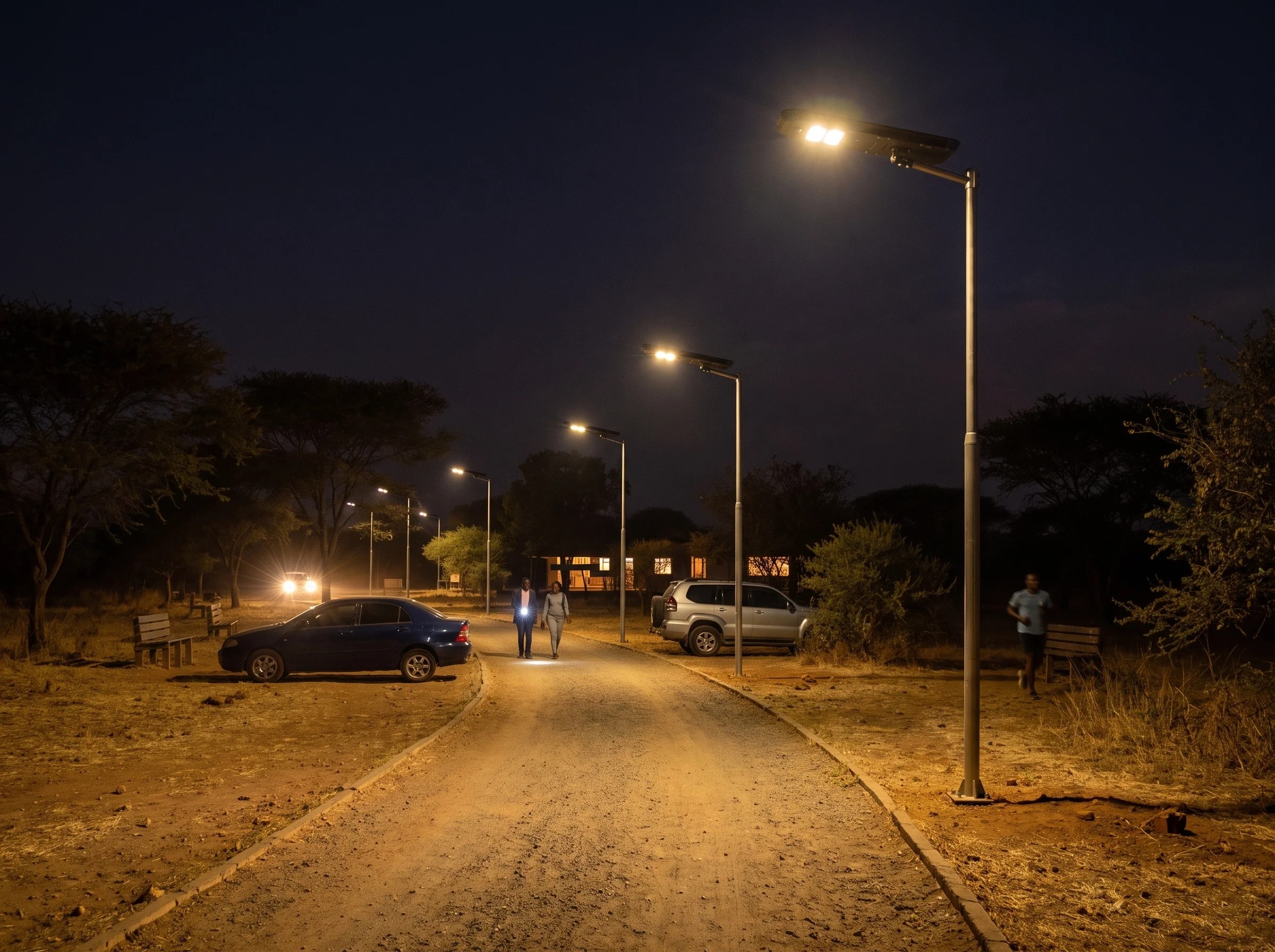
Parks, waterfronts, plazas and walking paths are where communities spend their evenings. Good lighting makes these places feel safe and welcoming after dark, encourages people to use them and helps prevent vandalism. Yet lighting a park is very different from lighting a road. The light has to be comfortable rather than intense, it must respect trees and wildlife, and installing cables across lawns and gardens can damage the very landscape the park is meant to show off.
Solar lighting solves many of these problems. This guide explains how planners and landscape designers can use solar street lights in parks and public spaces, and what to consider at each stage.
Why Solar Suits Parks and Public Spaces
The biggest practical advantage of solar lighting in parks is that it needs no cables. Running power to lights along a winding path means trenching through lawns, flower beds and tree roots. With solar lights, each pole is independent, so installation only needs a small foundation for each light.
- Less damage to landscaping. No cable trenches through planted areas or near tree roots.
- Easy to extend. New paths, playgrounds or sports areas can be lit without extending the power network.
- Light during outages. Public spaces stay lit even when the grid fails.
- No energy bills. Lower running costs for the municipality or park operator.
- A visible commitment to sustainability. Solar lights in a public park show residents that the city takes clean energy seriously.
Planning by Zone
Different parts of a park need different lighting. Planning by zone keeps the light where it is needed and avoids over-lighting the rest:
- Main paths and entrances need consistent, even light so people can see each other and the path ahead. Poles of around 3 to 5 metres are common.
- Car parks and service roads inside the park need light similar to residential streets, often from 6 to 8 metre poles.
- Plazas and gathering areas benefit from a slightly higher light level and good colour rendering so faces are easy to recognise.
- Playgrounds and sports areas may need specific light levels depending on when they are used.
- Natural areas, such as woodland, ponds and wildlife zones, should stay dark or very lightly lit to protect animals.
Comfort, Colour and Wildlife
Park lighting is about comfort as much as visibility. Warm white light, typically around 3000K, feels softer and more natural than cold white light and is generally better for wildlife. Well-shielded fixtures direct light down onto paths instead of into the sky or into nearby homes, which reduces glare and light pollution.
Many parks also use dimming profiles. Lights can run at full output in the busy evening hours and dim later at night when fewer people are around, saving battery power and reducing disturbance. Motion sensors can raise the light level when someone approaches on a quiet path.
Choosing the Right Type of Light
For most park paths and public spaces, compact all-in-one solar street lights are a popular choice. They combine the panel, battery and LED in one neat unit, which keeps the poles slim and the look clean. In shaded areas or less sunny climates, systems with a separate, larger panel may be needed so the battery charges fully.
Shade from trees is an important consideration. A solar panel under a tree canopy will not charge properly, so pole positions should be chosen with the trees in mind, or panels mounted where they get full sun.
Design and Safety
A lighting design for the park shows where each pole should go, how far apart they can be and whether paths are lit evenly. It also helps avoid dark spots near bushes or corners, which are the places people feel least safe. Experienced suppliers of solar lighting for parks and public spaces can usually provide this design as part of a project.
Vandal resistance also matters in public spaces. Sealed units mounted out of reach, anti-theft fixings and impact-resistant housings help the lights survive in busy or unsupervised areas.
Maintenance
Solar park lights need little maintenance, but they are not maintenance-free. Panels should be cleaned periodically, especially near trees where leaves, dust and bird droppings collect. Batteries need planned replacement at the end of their rated life. A simple maintenance schedule keeps the park bright for years.
Checklist for Planners
- Have the park’s zones been mapped, with a light level for each?
- Is warm, well-shielded light specified for paths and natural areas?
- Are pole positions chosen to avoid tree shade on the panels?
- Is there a lighting design showing even coverage on paths?
- Are dimming or motion profiles set to match how the park is used?
- Are the lights vandal-resistant and is there a maintenance plan?
Frequently Asked Questions
Do solar park lights work in winter?
Yes, if they are sized for the shortest days and the cloudiest weeks of the year. Systems sized for summer sunshine often struggle in winter, so the design should always use the worst month.
How bright should park paths be?
Paths need enough light for people to see the way and recognise each other, but not as much as a road. Lighting standards and a lighting design give the right level for each path.
Will solar lights disturb wildlife?
Warm light, shielded fixtures, dimming late at night and leaving natural areas dark all reduce the impact on birds, bats and insects.
How long does installation take?
Because there is no cabling, installation is mostly foundations and mounting. A small park can often be lit in days rather than weeks, with very little disruption for visitors.
Who maintains solar lights in a public park?
Usually the municipality or the park operator. A simple yearly plan covering panel cleaning, a visual check of each light and planned battery replacement keeps the system reliable with very little effort.
Final Thoughts
Solar lighting lets cities light their parks and public spaces without digging up the landscape, while cutting energy costs and keeping paths lit during outages. With careful zoning, warm and well-shielded light, attention to tree shade and a proper lighting design, solar street lights can make public spaces safer and more inviting after dark for many years.